Thursday, 24 April 2008

The Stars of Speculative Fiction #10: Kaaron Warren

411zD5wAiML._SS500_

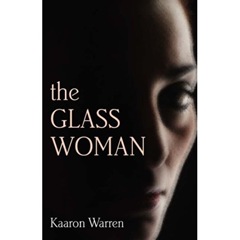
So Kaaron, you’re pretty much in all the anthologies I’ve been buying recently: 2012, Paper Cities, Year’s Best Science Fiction and Fantasy – Volume Three; The Grinding House has just been revamped with two new stories and a swish cover and been released as The Glass Woman (see above) internationally. It’s all looking a bit impressive!

1. Kaaron, what’s your favourite colour does living in Fiji have anything to do with this current run of stories and how has Fiji itself affected you as a writer?

My favourite colour is burgundy. I think it goes well with my colouring, though my mother disagrees. She is also unhappy that I changed the spelling of my first name, because the numbers don’t add up. But I like burgundy.

There does seem to be a lot of me in print at the moment. I didn’t plan it that way; it just happened. The only story which is truly Fiji-inspired amongst those you list is the one in 2012. It’s set in the government flats in Suva I pass quite often. I’ll be setting more stories there, because it’s a fascinating place.

I don’t think my writing has changed since being here, but obviously the input is different, so that shows itself in the stuff I’m working on. Before I left Australia I started a novel set on a large island, and that has been easier to write in greater depth living here in Fiji.

2. I have read quite a bit of your work and, of course, love it all. You write dark fiction that is very much based in the world we live. Why is it that you choose these mundane settings and don’t go for fantasy or other worlds in your fiction?

I think my settings are mundane on the surface but are not-quite reality. My worlds are one step sideways of our world. Our world in the future or our world in the past, all slightly shifted so it is almost familiar, if you squint.

I’m attracted to these kinds of settings because I love to think about possibilities at many levels. What if this is true and that isn’t? What if this led to that which caused this?

I spoke to some Year 12 kids today about using ideas in their stories. They’re writing SF/Fantasy stories as part of their school year, and I wanted to give them the idea that SF/Fantasy is not just about the setting. I took in a bunch of Guardian newspapers and got them to read through and take notes of any news stories they found interesting. I told them about my story “His Lipstick Minx” (which, while set in the mundane world of an oil rig, is about men who wear lipstick which controls their behaviour and the tiny women who sit on their shoulders) and that I wrote the story after reading about a woman arrested for having lipstick in her purse.

They came up with some great ideas, after initial hesitation. The best thing was, not only did they write down the news article which inspired them, but half of them started on stories straight away.

Getting kids writing already eh? Great stuff!

3. Well this sort of leads me onto one of my favourite questions, which is that of advice. What advice do you have for those just starting out on the writing road (or who have been writing a while and are getting frustrated)?

There’s a lot of talent and ideas in children and young adults. I’m working with a couple of different groups here and my main aim is to get them to think about what they’re writing. To be unusual, passionate and original. We’ll see how it goes!

Some of my basic writing advice is this: make sure your communication is as clear as possible. I don’t mean the story itself, which, if you want it to be, can be convoluted, other-worldly, whatever. I mean the words you choose shouldn’t cause confusion. It’s as basic as this: Don’t pick names which sound the same. Check your spelling, grammar and punctuation. Make sure that the reader doesn’t get caught on a small point when you want them to be moving on to the big one.

It’s important to decide why you’re telling this particular story at this particular time. Is it the day something changed? The time a drastic decision was made? Or a terrible discovery?: You need to pick the most important part of the story, the most interesting, and have that as your centre. All the rest revolves around that; leading up to and leading away from that central point.

As for being published: don’t send anything out unless you’re sure it’s ready. Get readers to give you feedback. Join a writer’s group. Rewrite the thing four, five, six times until you think it’s good. Every story you send out goes on the record. Editors remember the bad as well as the good; make sure yours is good.

Read the market you want to sell to. Read as much as you can. Read broadly.

Check the online market pages (Ralan.com is the one most people know) and start sending. Be prepared for rejection, and if you get feedback from an editor, consider it well. You may not agree, or the editor may have a very good point which will turn your story into a seller.

An annoying one: Keep writing. Every day if you want, but, whenever you think, “I should be writing,” then you should be. Try not to put it off. Well, obviously children need to be fed, shopping needs to be done, cats need to be told not to scratch the couch. But scribble a note on the back of the shopping list. Think about your story while you’re stirring the Bolognese. Let the story you’re working on become part of your daily life.

I better stop there. I’m obviously in teacher mode. I’ll be telling you to sit up straight soon.

*sits up straight and smoothes his hair down*

Good advice indeed, although I’m not sure kids need feeding as much as they think they do…

4. Who/what started you writing? Who/what are your inspirations?

I started writing properly when I was 14, I think. I wrote my first real short story and a novel that year. I started because I had ideas, and sentences came into my head fully formed. I loved reading from the age of five and one of my early influences/inspirations is Grimm’s Fairy Tales. I read them at five! I wouldn’t let my son read “Bluebeard” till he was ten. Too terrifying.

My inspirations are many. S.E. Hinton inspired me because she was a teenaged girl who published a novel. Harlan Ellison because he wrote such bizarre, evocative stuff. Ray Bradbury, because of his wonderful way with dialogue and the social commentary he made in some of his work. Lisa Tuttle, because her stories are so well-layered and intriguing.

Ah, Bluebeard. Have you read the version by Angela Carter ‘The Bloody Chamber’? It’s excellent!

5. How does music feature in your writing life, do you listen when you write, or are you inspired by music?

I adore Angela Carter. I read her voraciously when I was in High School.

I often play music when I write. My favourites are Radiohead and Muse, because of the furious nature of their music. If I’m writing a first draft, it’s almost always to them. I also like Rufus Wainwright, The Athletes, Thea Gilmour, Fiona Apple, PJ Harvey, Nick Cave, Bright Eyes Lifted and My Morning Jacket.

The only music inspiring me at the moment is a band called The God Machine.

Did I answer that last bit right?

That last bit was perfect *grins*

6. What do you do when you’re not writing?

In my other life? I’ve got two kids, 9 and 7, who are extremely interactive and great to be with. I’ve got a husband as well, who has the same qualities. So lots of family time.

Living in Fiji there are plenty of adventures to be had. There are people here from all over the world, and because many of us are here short-term, you make friends easily. I love breaking bread with people, drinking wine, ranting on about something which has offended me.

I love to read. A Japanese friend gave me a book called Botchan, about a teacher in a remote country school far from Tokyo, written a hundred years ago. I’m loving it. It’s funny and revealing and an easy read.

I’m crocheting my daughter a jacket. I do like to crochet. Sorry if that destroys my image. I like crocheting while watching crap on TV. I feel like I’m not wasting my time, then.

I watch crap on TV. Fiji TV is particularly bad. We bought back Damages, Dexter and The Tudors from Australia, though, and I’m enjoying those.

Dexter is wonderful ‘Crochet Kaaron’!

7. What have you got lined up then, what’s the plan for your writing over the next few years (supposing you have one)?

Plan for writing is to finish the novel I’m working on (almost done), write a bunch of the short stories I’ve got on the boil, start the next novel, and sell the lot!

Easy peasy!

8. After Fiji is it straight back to Oz, or have you any plans for further travel?

We'll go back to Canberra for a few years then play it by ear. The kids' schooling is important, so I'm thinking they'll probably do High School in Australia. After that, who knows!

Thank you so much for taking the time to do this Kaaron and I hope you get better soon. I’ll be keeping an eye on your career (both as reader and publisher) and I wish you every success in the future!

Wednesday, 23 April 2008

Scenes from the Second Storey = Two Line-ups!

A project I have had in mind for a few years was to write a collection of short stories that would pay homage to one of the greatest albums of all time Scenes from the Second Storey by The God Machine.

The idea was that I would write 13 short stories to correspond with the 13 tracks on the album, each story inspired by the track of the same name.

This year that dream changed, as I realised what would be really interesting was to see what the stories would look like if others wrote their inspiration instead - namely writers that I respected.

And so the Scenes from the Second Storey project was born. I sat down and began jotting down names only to quickly realise I had too many for the book. As I realised that more than half of the list contained Australian writers, I decided to have two books: one Australian and one 'international' basically writers who are not Australian).

I sent out my e-mails and got 25 acceptances and one rejection. I then sent another mail, was accepted for that and so begins this roller coaster of a project!

Morrigan Books will release both these books 13th November 2009 (my birthday) but of course there will be much more news before that!

Here's the line-up:

Title Australian Author International Author
Dream Machine David Conyers Miles Deacon
She Said Kirstyn McDermott Skadi meic Beorh
The Blind Man David Witteveen Carole Jonhstone
I've Seen The Man Paul Haines Gary McMahon
The Desert Song Andrew McKiernan Adrienne Jones
Home Shane Jiraiya Cummings Shannon Page
It's All Over Deborah Biancotti Paul Kane
Temptation Trent Jamieson Pete Kempshall
Out Ben Payne Lynne Jamneck
Ego Robert Hood Gerard Brennan
Seven Stephanie Campisi Ronald Damien Malfi
Purity Kaaron Warren Tammy Moore
The Piano Song Cat Sparks Ian Whates

Monday, 21 April 2008

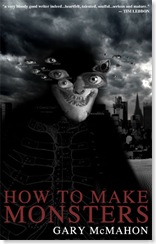
How to Make Monsters by Gary McMahon: Cover art

monsters_front

And here we have the official front cover for Gary McMahon's new collection, How to Make Monsters, which will be released at FantasyCon in Nottingham, England, this September.

Great artwork for a truly great collection!

Friday, 18 April 2008

The Stars of Speculative Fiction #9: Simon Guerrier

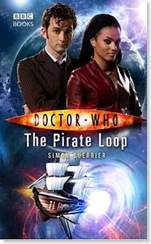
The Pirate Loop

1. Well you’ve certainly been busy over the last few years, after having a few short stories published, you moved on to editing and have also had two novels published. In truth it’s difficult to keep up with you. What are the current projects and how is everything going?

Things are going just fine, thank you. I’m currently proofing an anthology of Doctor Who short stories by 25 first-time authors. “How The Doctor Changed My Life” is a collection of winners from a competition we ran last year. I’m really, really pleased with the book – we’ve spent months honing the stories, knocking them back and forth, getting them just right. And as a result it’s a really strong collection, due out in September.


On top of that, I’ve just written a half-hour audio play for the new version of Blake’s 7, which explores the early life of Blake’s friend Jenna Stannis. She’s a space pilot and I had to bone-up on all the fiddly mechanics of rocketry and velocity in space, because they don’t have convenient sci-fi things like space drives and warp engines. I’m not really very good at maths stuff, so that was a bit of a challenge. But now I know all about orbital rendezvous and delta-v calculations. Go on; test me.


I’ve just been asked to do a couple of reviews and I’m making notes for an academic paper on Iain Banks’ science-fiction stuff for Foundation – a follow-up to a paper I wrote them a decade ago. And I’m also writing a handful of things that I can’t talk about yet because they’ve not been formally announced. It’s odd how this works; by the time something’s announced you’re usually long finished on it and have moved on to other stuff. So watch this space. But still busy!

Blimey, no wonder I can’t keep up, that’s storming stuff!

2. You’ve been a fan of Doctor Who for many years and this is where most of your published work is based. How has the return of the TV series affected your career and what do you think of the new Doctor Who compared to the previous incarnations?


I love the new series of Doctor Who. I get the same giggly thrill from it now as I did when I was six years-old. What’s changed is not how I feel about it but that so many other people love it, too. Liking Doctor Who used to be something you only admitted in whispers.


I love that the new series cherry picks stuff from previous versions of Doctor Who – and not just the old monsters and characters. Just on Saturday, David Tennant had a line referring back to stuff he did when he was William Hartnell. They’ve also nicked bits from audio plays, books and short stories… And in some ways that’s a vindication of all the stuff going on while the show was off the air. All this stuff I used to read avidly. See? It was brilliant! Anything can go in. The doors on the inside of the TARDIS are lifted from the two Peter Cushing movies of the 1960s. It all counts!

As to how it’s affected by career… I was writing my first Doctor Who novel, The Time Travellers, as the new series started to air. And it made me rethink a lot of what I was doing; the feel of it, the structure, the emotional complexity, the need to feel consequences. I think – people might disagree – that my writing’s got a lot better as a result of the things they’ve done on the new series. I think it’s made my plotting bolder and helped me find my “voice”. And writing a new series book, with the show so popular, has opened a lot of doors. One publisher I’d pitched to for years with little response offered me a job on the back of it. Thank you, Doctor!

3. Speak of Doctor Who novels, how’s The Pirate Loop doing and tell us a little bit about it.


I got an email out of the blue about a year ago. “Probably a stupid question,” said Justin the editor, but would I like to write an original novel featuring the tenth Doctor and Martha Jones – who’d at that point not been on the telly. They wanted a science-fiction story and they liked the paradox stuff in my earlier book, The Time Travellers.
In fact, a lot of the plotting was about how to make it different from that earlier book. At a basic level they’re the same story – they’re caught in a loop which makes strange things happen. But where The Time Travellers was earnest and bleak, The Pirate Loop is joyful and silly. It’s Doctor Who versus space badger pirates, foiling their wicked schemes with some canapés. I wanted to write something that would make my wife laugh and cry. And – hah! – I did.


Doctor Who Magazine made it their pick of the month. I’ve been delighted by how many old and long-lost friends have been in touch as a result of me doing it. So yeah, it seems to be doing really well. Of course, not everyone agrees. My favourite criticism so far is an old mate who complained that, compared to The Time Travellers, “It’s almost a completely different book”. I like the almost.

4. Although this has been half answered with your Doctor Who question, are there any writers out there that have inspired you, made you want to write? What sort of stuff do you prefer to read?


I’ve always written stuff but the bloke who made me realise I could actually be a writer – and pay the bills by writing – was Doctor Who’s Paul Cornell. I love Paul’s writing but he also explained the practicalities of being a writer – that if you want to write, you just have to get down and do it. And being a Doctor Who fan means you have a lot of very supportive peers. Well, I say, “very supportive” – there’s lot of people to point out what you’re doing wrong.


When I find writers I like, I tend to work my way through everything they’ve done. Maybe that’s a weird obsessive stalker thing, but I like to think it’s because I’ve latched on to the good stuff. Authors who I’ve read pretty much all of include Iain Banks, Paul Auster, John le Carre, Ian Fleming, Alexei Sayle, China Mieville, Neil Gaiman… I’m not sure there’s much of a connection between them. Um… They all kind of write twisted thrillers, maybe? Apart from the ones that don’t…


But I also read a lot of history and pretty much anything my clever mates recommend. A lot of the writing I do needs some level of research, but I’m quite happy finding stuff out. And it’s quite common that a commission includes some kind of reading list.

5. You’ve been part of a few competitions to promote new authors, with the obvious one being the new book mentioned in question 1 (an idea I have taken for Gilgamesh Press). What have been your experiences of them and what tips do you have for aspiring writers?

Running the competitions has made me realise how generous so many authors and editors have been with me as I was starting out. There’s a lot you pick up just by having your first thing published. Thanks to Johnny and Clay and Jac and Gary who mopped up my toddling mistakes. But it’s worth it because of the writers’ enthusiasm and élan, and from knowing how much the same break would have made to you. It also makes you realise how much you’ve picked up since you started, all the tips and tricks that you can pass on.


The main advice for aspiring writers is just to write. Finish the things that you’re writing. It’s not about just having a good idea; you need to practice and improve making it work as a story. That’s the difference between knowing a good joke and being able to tell it so people laugh. And until you’ve got something written in full there’s no point giving any other advice.

But once you’ve written something, the advice is all about things that can make it work better. How you rewrite a sentence to make it punchier. How you can make things easier for the reader by being sure we always know who is speaking, or whose point of view we’re in. How you can make a description more vivid by using all the senses. Tips on avoiding clichés or the passive tense. Specific ways of honing that specific bit of writing.

6. How important a role does music play for you as a writer, do you listen while you write, are you inspired by music or do you prefer silence?


I listen to music when I’m writing, usually in the background and not really being conscious of it. The shuffle on iTunes is my friend, so there’s a weird hodge-podge of poppy stuff, angsty stuff, stuff made by my mates and one or two obscure novelty records.
Sometimes I use the feel of a song as the “voice” of a book – I think The Pirate Loop really came together when I realised it should feel all bouncy like Mika’s “Grace Kelly”, which is why that song’s in the book. The Bernice Summerfield anthology “Something Changed” took its name from a song by Pulp which is – like the book – a paradox.
But I find music very difficult to write about. One of the best editorial suggestions I ever made was a stage direction in the final scene of the audio play The End of the World. I added “Bach’s St. John’s Passion is playing in the background.” And when the writer asked why, I could only say “Trust me.” I couldn’t explain it any better. It just it lifts that scene, makes it work on such a different level…
See? I can’t even articulate it now. There aren’t the words to explain just what it does. I guess that for me music isn’t about words. It has lyrics, yes, but they’re never as important as how the music makes you feel. Something that’s especially evident in my own crummy efforts to write song lyrics.

*remembers he hasn’t read any of Simon’s lyrics and makes a note to get hold of them*

7. After successful stints as both editor and writer, do you have any preference to focus on one of them in the future or do you like working with both? What do you like/dislike about the two?


Writing is something I have to do. It’s more of an affliction than a job. If I wasn’t being published I’d still be writing anyway. It’s the only way to exorcise the wild legion in my brain.


Editing and producing takes a lot of time and effort. I was producer of the Bernice Summerfield range for two years and it rather took over my life. It was brilliant to do, it meant working with some fantastically talented people, and I’m really pleased with what we achieved under my watch. But it was also just exhausting. As producer you have to watch everything – the type-setting and the paper stock and the delivery dates and the bookings. Whereas just doing the writing that’s all someone else’s problem. You can zip in and away again like some magic ninja. So I’m concentrating on my own writing now, rather than working on other people’s. That’s not to say I won’t edit anything ever again, but not for a long while yet.

8. What do you do when you’re not writing/editing?


I try to drown out the horror with booze and Jaffa Cakes. Um… I read. I laze about, thinking odd thoughts. I try not to bother my wife or cat too much. I dunno really.

9. What is speculative fiction?

Easy! It’s a euphemism for science-fiction, as used by embarrassed fans. They use it to justify why they’re reading whatever it is they’re reading. “It’s not that schlocky stuff with monsters,” they say. “It’s really a testing ground for new kinds of philosophy.”
Thing is, I really like the schlocky stuff with monsters. And weird stuff. And jokes. Yes, I like the big and clever ideas of sci-fi, but the word “speculative” always make me think of “pondering”: dull people in polyester uniforms explaining at tedious length how the lights on their spaceship work. The kind of conversations that begin, “Well, as you already know…”. I came up with the following bit of advice after I’d judged last year’s writing competition. People walking down a corridor and discussing science: no! People being chased down a corridor by monsters and discussing science: yes!

Ha, well no wonder I have received countless e-mails about this question as all three writers I’ve asked have come out with different viewpoints – let’s just blame Atwood eh?

10. Does being an editor help when you submit your own pieces or can it just be as much of a hindrance? What do you expect from editors/publisher when you send work to them?


I think it helps because you know the sorts of things that you yourself respond to. People who are polite and funny and make you want to listen. People who keep their pitches short. People who don’t assume you’re going to employ them. I’ve also got some experience of financial and project management which means I can at least sympathise when an editor is tearing their hair out. But then you also pick these things up just by working with different people, seeing how they like to work. It’s about trying to make their lives easy. That’s why – you hope – they employ you again.


Pretty much everything I send editors and publishers now is something that they’ve asked for – either an opportunity to pitch or a straightforward commission. So you usually have some idea of what the stages of the job will be. But when you’re starting out, and even now when you’re sending stuff on-spec, you’re not even sure of getting a response to say that they’ve received it. So you just plug away, sending stuff to different people, hoping someone will notice. Nobody is obliged to read what you send them, nor to recognise your genius. So it’s probably best not to expect anything from them.

Thank you very much for agreeing to do this and I just want to take this opportunity to wish you all the best with your future projects and looking forward to seeing your books on bookstores’ shelves for many years to come.

(Simon can be found hanging out on his blog here)

Thursday, 17 April 2008

Nex, revisited

I have just discovered my work for the day is done: not only do I have Gary McMahon on the book with me but have also roped in Paul Kane and Mike Stone!

I was pretty well buzzing last night on getting Gary's collection, now I'm just about ready to explode!

Just thought you'd like to know that...

Remember that post-apocalyptic thing?

Well the project has just got a real boost, as now, not only will I be writing several stories for this myself but I have just got a yes from Gary McMahon to work with me on it!

Gary and I will write the last story, which has the working title of Bellatorius, and is to focus on two gangs fighting it out among the ruins for... well... you'll have to wait and see won't you?

I'm also in touch with two other authors regarding this so there may be some more news soon...

Wednesday, 16 April 2008

It's all McMahon's fault!

Over the last few days I have been reading quite a bit of stuff from Gary McMahon (around 20 short stories) and apart from my eyes being tender to the touch, he has inspired me to start on my oft-pondered collection.

It is to be tentatively titled Nex, and will be concerned with all things post-apocalyptic. The opening story will be my epilogue from In Bad Dreams, Corvus. I have some stuff from NaNoWriMo that will be tidied up and put into it too and I have an idea to work on some new material too.

I'm rather excited about it all and have had a chat with him upstairs (that's God not Gary, although he is a personal hero of mine) about increasing the day to 30 hours and making it so I only require 4 hours sleep to work effectively - what do you reckon?